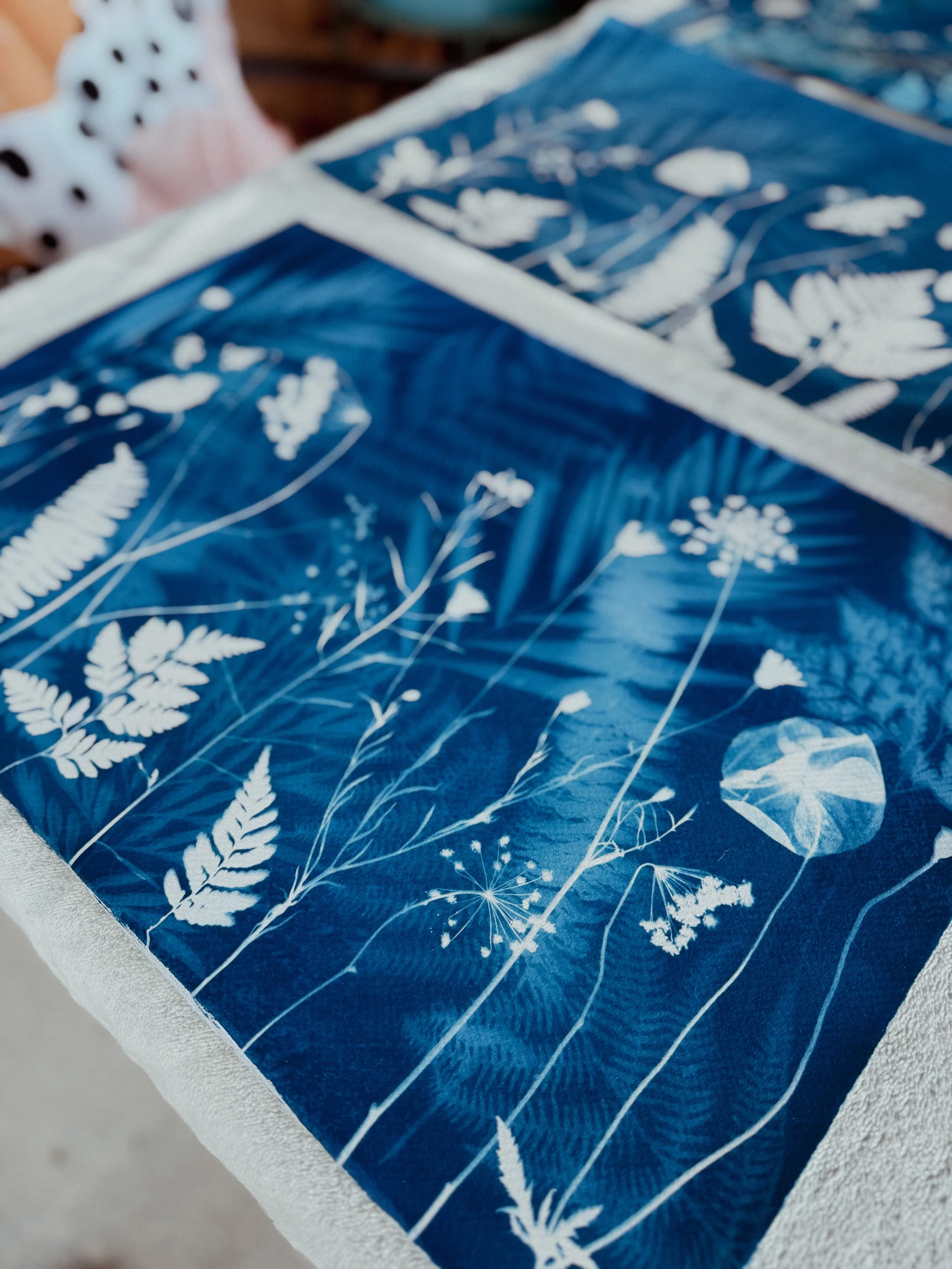
Wanderlust and Wildflowers
A practice of collecting, remembering, and returning.
There is a quiet kind of noticing that happens when you travel.
Not the kind marked by landmarks or itineraries, but something slower—more intimate. It lives in the pauses. In the moments when you look down instead of ahead. When a small wildflower growing along a roadside or path catches your attention just long enough to make you stop.
Over time, I began to follow that instinct.
To pause. To observe. To collect.
What started as a simple habit—gathering small botanicals during walks, travels, and even ordinary days—slowly became something more meaningful. Each stem, each leaf, each wildflower began to feel like a fragment of a place. Not just something beautiful, but something that held memory.
A record of where I had been.
The Language of Small Things
Wildflowers are often overlooked. They grow quietly at the edges—along trails, in open fields, between stones. They are not cultivated or arranged. They exist where they are, shaped by their environment and the season they belong to.
When I began collecting them, I wasn’t thinking about preservation or art. I was responding to something instinctive—a desire to hold onto a moment that felt fleeting.
Later, through the process of pressing, I realized something subtle but powerful:
These botanicals were not just objects.
They were markers of experience.
A single pressed flower could bring me back to a specific place—the light, the air, the stillness of that moment. It carried more than form. It carried feeling.
Pressing as a Practice of Memory
The act of pressing botanicals became a way of slowing down time.
In flattening a plant, in preserving its shape and structure, there is also a quiet act of attention. You begin to notice details you may have otherwise missed—the curve of a stem, the delicate structure of petals, the way a leaf holds its form.
But beyond observation, something deeper is happening.
You are choosing to keep something.
To say: this mattered.
And over time, these collected pieces begin to form a kind of personal archive. Not organized by importance, but by presence. By where you paused long enough to notice.
Wanderlust, Reimagined
Wanderlust is often understood as a desire to go—to see new places, to move, to explore.
But I’ve come to experience it differently.
Not as a need to constantly move forward, but as a way of being present wherever I am.
Sometimes the most meaningful discoveries are not found far away, but in familiar places—walked again and again, seen through a slower lens.
A roadside wildflower.
A plant growing through a crack in stone.
A stem collected on an ordinary afternoon.
These moments hold just as much weight as distant landscapes.
A Practice You Can Carry With You
Collecting wild botanicals doesn’t require travel in the traditional sense.
It can begin wherever you are.
A garden.
A neighborhood walk.
A place you return to often.
The practice is simple:
Notice what draws your attention.
Pause long enough to observe it.
Collect with care.
Preserve it when you’re ready.
And over time, allow these small fragments to gather into something larger—a record of where you’ve been, both physically and emotionally.
Returning to What Was Collected
When you revisit pressed botanicals later—weeks or months after collecting them—they offer something unexpected.
They return you.
Not just to a place, but to a version of yourself who stood there, who noticed, who chose to gather that piece of the world.
In this way, a herbarium or collection of pressed botanicals becomes more than an archive.
It becomes a quiet companion in your life—holding moments you might otherwise have forgotten.
Closing
Wildflowers and wanderlust are not separate ideas.
They meet in the act of noticing.
In the decision to pause.
To gather.
To remember.
And in doing so, to create something that allows you to return—not just to a place, but to a feeling that once lived there.